RSS Feed Readers for Intentional Reading
Tired of endless scrolling and algorithm-driven feeds? RSS readers offer a simple way to take back control of your online reading.
RSS (Really Simple Syndication) organizes content chronologically from your chosen sources - no tracking, no manipulation. Tools like Fifteen limit you to 15 sources, helping you focus on what truly matters while reducing digital clutter. Here's why RSS readers are worth considering:
- No algorithms: See content in the order it’s published, not what platforms prioritize.
- Distraction-free design: No ads, likes, or notifications - just the content you want.
- Custom limits: Fifteen's cap on sources ensures a focused reading experience.
- Content archive: Save and search articles with ease, turning your feed into a personal library.
- Affordable plans: Free and Pro options ($7.70/month or $77/year) cater to different needs.
RSS readers simplify digital consumption, making reading intentional rather than overwhelming. If you're ready to reclaim your attention, tools like Fifteen are a great place to start.
Getting started with an RSS reader
sbb-itb-d395ae5
Fifteen: A Feed Reader for Focused Reading
Fifteen RSS Reader Free vs Pro Plan Comparison
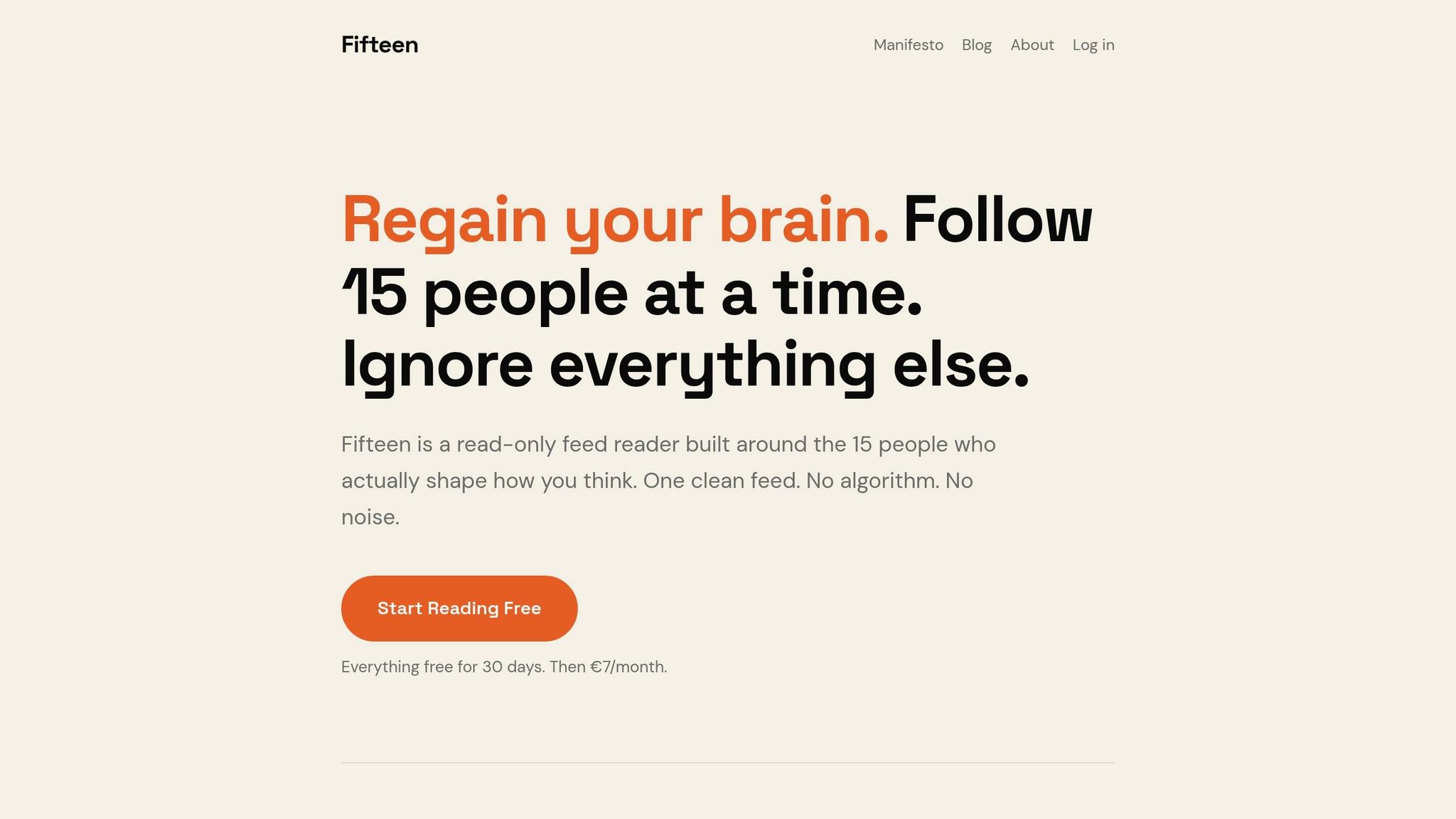
Fifteen poses a simple yet thought-provoking question: what if you could only follow 15 people? This limitation pushes you to carefully choose creators and writers who genuinely deserve your attention. Instead of drowning in an overwhelming number of unread feeds, you get a curated selection of voices that truly matter to you.
The platform's design takes inspiration from Dunbar's theory, which suggests humans can only maintain meaningful relationships with a limited number of people. By capping follows at 15, Fifteen encourages a focus on quality over quantity. It pulls content from platforms like YouTube, Substack, Medium, or any blog with an RSS feed, making every follow a deliberate choice. Here's how Fifteen redefines your reading habits.
Follow Up to 15 People
The 15-person limit has a purpose: it keeps your reading list manageable and meaningful. With only 15 sources, you can focus on creators who consistently deliver content you value.
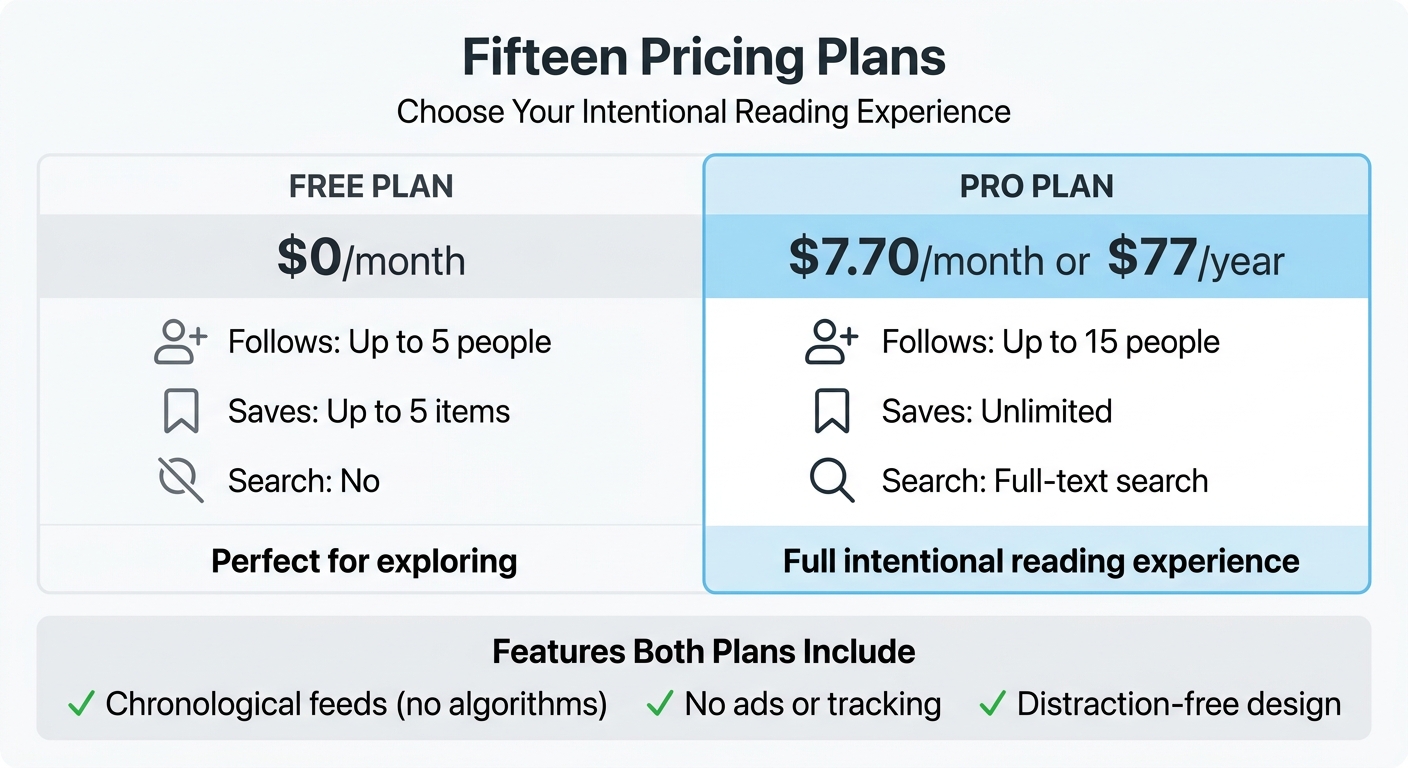
The Free plan allows you to follow up to 5 people, which is a great way to explore the platform. For those who want the full experience, the Pro plan ($7.70/month or $77/year) unlocks the ability to follow all 15. These limits are intentional - they help you maintain a focused and intentional reading experience.
Chronological Feeds Without Algorithms
Fifteen organizes your feed in strict chronological order, showing the newest posts first. There’s no algorithm deciding what you see. As Blogs Are Back put it, "Social platforms optimized for engagement have made reading feel like work - an endless scroll of content ranked by what keeps you hooked, not what you asked for".
The interface is stripped down and distraction-free. There are no likes, comments, share buttons, ads, or tracking pixels - just a simple feed of new content. This minimalist approach lets you read at your own pace without unnecessary interruptions.
Save Content and Search Your Archive
If you come across something worth revisiting, you can save it to your personal archive. Free users can save up to 5 items - perfect for a handful of key articles - while Pro users enjoy unlimited saves and a full-text search feature across their archive.
This turns your feed into a personal knowledge base. Whether it’s an article you read last week or months ago, you can easily retrieve it with a quick search. And all of this happens without any tracking or surveillance.
Pricing and Plans
Fifteen’s pricing reflects its focus on intentionality, encouraging thoughtful curation through clear boundaries.
| Plan | Price | Follows | Saves | Search |
|---|---|---|---|---|
| Free | $0/month | Up to 5 people | Up to 5 items | No |
| Pro | $7.70/month or $77/year | Up to 15 people | Unlimited | Full-text search |
Both plans provide the essential experience: chronological feeds free from algorithms, ads, or tracking. The Pro plan simply expands your options, allowing you to follow more creators and build a more comprehensive archive of content.
Benefits of RSS Feed Readers for Intentional Reading
RSS feed readers bring a refreshing change by eliminating algorithmic bias, delivering content in the exact order it was published - no manipulation, just pure chronology.
By removing psychological pressure, these tools help reduce stress. Many users hide unread counts and notification badges, sidestepping that overwhelming "to-do list" sensation. As Current aptly puts it, "Reading should feel like floating, not drowning". This setup allows you to read at your own rhythm, free from the nagging guilt of an ever-growing backlog. It fosters a calm, distraction-free environment that encourages intentional engagement with content.
The distraction-free design of many RSS readers is another big plus. By stripping away sidebars, navigation menus, and visual clutter, they create a clean, focused reading experience. Some even offer focus modes that present only the core text, uninterrupted. John Gruber from Daring Fireball summed it up well: "It's like reader mode all the time".
Another standout feature is the level of control users have over their content. Some readers allow you to tweak "content velocity", ensuring that breaking news fades out naturally while long-form pieces remain accessible for longer. High-volume feeds can be muted temporarily without unsubscribing, making it easier to organize your reading list while keeping valuable sources intact.
This shift from algorithm-driven engagement to user-controlled reading transforms the experience. What was once endless scrolling now becomes a deliberate, enriching activity. As SereneReader puts it, "Your attention is not a metric".
How to Choose the Right RSS Feed Reader
Think of your RSS feed reader as a tool to protect your focus and manage your attention. It’s essentially a system designed to help you allocate your mental energy wisely. The first step? Identify the main distraction you’re trying to solve.
If you’re overwhelmed by too many sources, look for readers with strong filtering options and customizable rules. For those who prefer a simpler experience, focus on readers with clean designs and no distracting features like unread counts. Consider this: knowledge workers switch between apps roughly 1,200 times daily, losing about 9% of their yearly work hours to constant context switching. On top of that, it takes an average of 23 minutes and 15 seconds to regain focus after an interruption. A good RSS feed reader should help cut through this chaos, reducing friction and distractions to create a smoother reading experience.
For a more curated approach, check out tools like Fifteen, which are designed for intentional reading. This reader limits users to following just 15 sources and eliminates algorithms, ads, and tracking. It’s part of a growing trend among professionals who are moving away from algorithm-driven timelines - RSS adoption among professionals grew by 34% year-over-year in 2026. The hard cap on sources avoids the “firehose” problem, while the chronological feed ensures you see content as it’s published, not what an algorithm thinks you want.
If you’re drowning in emails, consider whether you need newsletter integration. Some RSS readers can route newsletters to a dedicated space, cutting down on the 11.7 hours per week that knowledge workers typically spend on email. Additionally, look for features that allow non-essential news to expire after a few days, helping you avoid a backlog. These tools aim to shift your reading habits from endless scrolling to intentional engagement.
"It's not information overload. It's filter failure." - Clay Shirky, Writer and Professor
The key is choosing a reader that aligns with your priorities - whether it’s simplicity, control, or capturing knowledge. The right RSS reader can turn chaotic browsing into a more deliberate and rewarding experience.
Conclusion
Intentional curation offers a clear path to tackle digital overload. RSS feed readers simplify the chaos by delivering a manageable, chronological feed from sources you choose. This approach shifts your online habits from mindless scrolling to purposeful engagement.
Ezra Klein captures the essence of this mindset perfectly:
"Life is the sum total of what we pay attention to. Who is in control of that attention, and how we can wrest it back, is a central question of our age."
Fifteen takes this idea to heart, putting you firmly in control. By limiting yourself to just 15 sources, it encourages a vital question: Who truly matters to me? This isn't a restriction - it’s a safeguard, helping you avoid the endless flood of information and focus on what’s meaningful.
The benefits are clear: sharper focus, less context-switching, and deeper engagement. It's no coincidence that RSS adoption among professionals surged 34% year-over-year in 2026. In a web designed to capture everyone’s attention, RSS tools like Fifteen prioritize yours.
To get started, pick 10–15 trusted feeds and let Fifteen cut through the noise. With only intentional, distraction-free content in your feed, you regain control over your limited attention. This simple yet effective approach embodies everything intentional reading stands for, restoring clarity to your digital life.
FAQs
How do I find the RSS feed for a site or creator?
To locate an RSS feed, a simple trick is to add /feed at the end of the website's URL - this is particularly common for WordPress sites. If that doesn’t work, you can inspect the page source. Right-click on the webpage, choose 'View page source,' and search for the term 'RSS.' Alternatively, browser extensions or online tools can help identify feeds automatically. For YouTube channels, the channel URL itself functions as an RSS feed.
What happens when I reach the 15-source limit in Fifteen?
If you hit the 15-source limit in Fifteen, you won't be able to add any new sources unless you remove one you've already added. The platform is built to allow following up to 15 sources, ensuring a more focused and intentional reading experience.
How can I keep my RSS feed from turning into a backlog?
To keep your RSS feed from becoming an overwhelming backlog, it's important to actively manage your reading habits. Choose a reader that allows you to organize and prioritize your feeds effectively. Setting aside dedicated time for reading can also make a big difference. Look for features like chronological views and filters to help you zero in on the most relevant content. By processing new items regularly, you can avoid a pile-up and maintain a more intentional and manageable reading experience.
Get started with intentional reading. Try Fifteen →
See also: What Is an RSS Feed and Why Should You Care — the basics of feed-based reading.